
2026 NLIHC Housing Policy Forum
March 10-13, 2026 | Capitol Hill Day: March 13
NLIHC’s Housing Policy Forum 2026 will convene community leaders, policy experts, researchers, tenant advocates, affordable housing practitioners, and members of Congress for thought and action partnership on ending the housing crisis impacting lowest-income and most marginalized renters in America.
Contact
Lisa Marlow
Senior Director of Communications
[email protected]
Adelle Chenier
Senior Director of Events
[email protected]
Featuring:
-
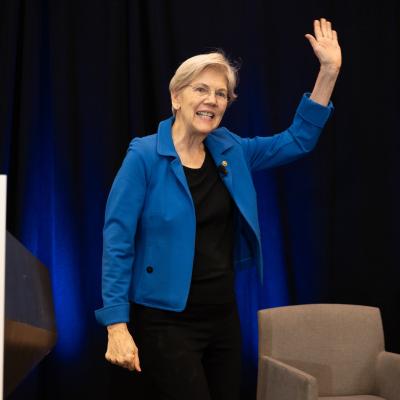
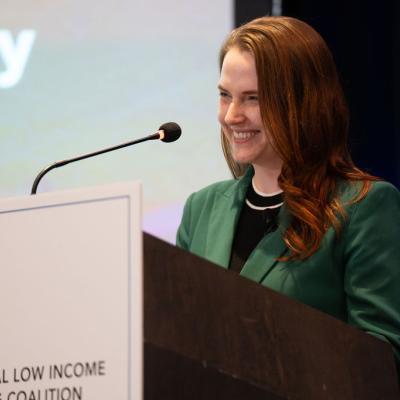
Renowned Author and Civil Rights Activist
-
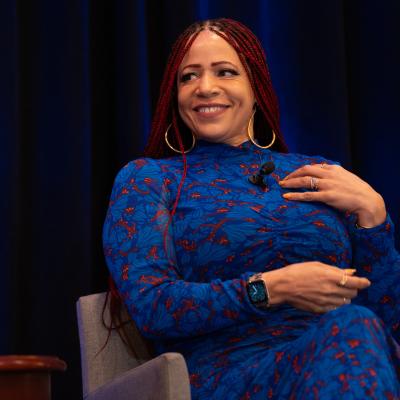
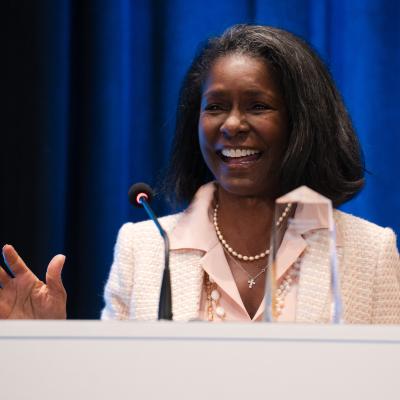
Journalist and Author
Pre-Forum Schedule
*Pre-Forum events are for State and Tribal Partners and Tenant Leaders ONLY
Tuesday, March 10
2:00 pm – 6:00 pm
State & Tribal Partners Convening *
Columbia 3 & 4
Tenant Leader Session *
Columbia 1 & 2
3:00 pm – 4:00 pm
Coffee Break *
Columbia North
6:30 pm – 8:00 pm
State & Tribal Partners/Tenant Leaders Opening Dinner *
Columbia 5, 6, 7, & 8
Special Presentation by Batalá (bah-tah-LAH) Washington, an all-women drum band playing Afro-Brazilian music from the vibrant city of Salvador, Bahia
Wednesday, March 11
7:30 am – 8:30 am
Continental Breakfast *
Columbia North
8:30 am – 12:00 pm
State & Tribal Partners Convening *
Columbia 3 & 4
Tenant Leader Session *
Columbia 1 & 2
12:00 pm – 12:45 pm
State & Tribal Partners and Tenant Leaders Lunch *
Columbia North
Forum Schedule
Wednesday, March 11
1:00 pm – 2:50 pm
Opening Plenary Session
Columbia 5, 6, 7, & 8
Keynote Speaker
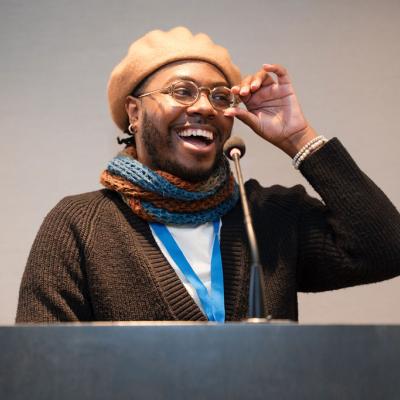
Renowned author and civil rights activist, Bakari Sellers, joins NLIHC President and CEO Renee M. Willis for a discussion on actions needed to address the nation's housing crisis, now and beyond.
2:50 pm – 4:45 pm
Coffee Break
International Terrace & Columbia North
3:45 pm – 5:00 pm
Breakout 1 – An Ecosystems Approach to Housing Justice
Columbia 1 & 2
NLIHC’s State & Local Research team identifies, uplifts, and examines the mechanisms by which stakeholders at the state and local level can ensure safe, accessible, equitable, and affordable housing for the lowest income renters. In this session, we will explore the importance of using an “ecosystems approach” to advancing housing justice at the state and local level – that is, taking into account the full landscape of tenant protections and affordable housing policies in order to maximize sustained, positive impacts for tenants. We will also share the ways in which our team is enhancing our publicly available resources and research to better support ecosystems thinking.
Breakout 2 – Immigrant Advocates are Housing Advocates: The State of Immigration Rights and Housing Justice (Closed to Press)
Columbia 3 & 4
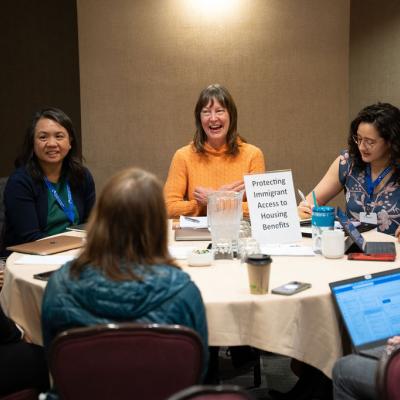
Across the nation, communities, advocates, and service providers are struggling to meet the housing needs of immigrants amid an ongoing and worsening affordable housing crisis. Immigrants face unique challenges in obtaining affordable housing, as some newcomers struggle to secure and maintain the permits needed to legally work, and many are ineligible for most federal benefits and too often met with discrimination in their new community. More recently, targeted attacks have created an increasingly hostile environment where many immigrants fear for their safety. Targeted attacks on the immigrant community also make it increasingly difficult for people to stably work, pay their rent, and fully exercise their rights as tenants. This panel will explore the ways that immigration impacts the state of affordable housing, best practices for prioritizing safety in political advocacy, messaging to counter anti-immigrant sentiments, and strategies for advocates to advance safe, accessible, and affordable housing for all.
Breakout 3 – Higher Ground: Disaster Related Organizing at the State and Local Levels
Columbia 9 & 10
Disasters, often driven by climate change, are increasing in frequency and severity. Simultaneously, the country’s disaster response and recovery system is decentralizing, placing more responsibility on state and local governments who often do not have the resources or the experience to effectively respond. As a result, state and local organizing that integrates and advocates for equitable disaster response and recovery programs become increasingly important. This panel will feature advocates and organizers working within their states and communities to increase equitable programs, create best practices, and – sometimes – fill in the gaps of our response and recovery system themselves. Attendees will have the opportunity to hear how they can begin organizing around disaster response and recovery in their areas to ensure every disaster survivor receives the assistance they need to fully recover.
Breakout 4 – (Closed Session)
5:30 pm – 7:30 pm
Opening Reception
Columbia West
Thursday, March 12
7:30 am – 8:30 am
Continental Breakfast
Columbia North & West
8:30 am – 9:40 am
Plenary Session – Zillow's "Technology and Renter Protections: Tools to Expand Access, Stability, and Equity"
Columbia 5, 6, 7, & 8
This session brings together advocates, researchers, and industry leaders to examine renter-focused tools designed to expand access, strengthen tenant protections, and support housing stability. The discussion will explore how technology can be aligned with tenant protections, affordability, and racial equity–while ensuring transparency, accountability, and meaningful benefit for renters.
9:30 am – 10:30 am
Coffee Break
International Terrace & Columbia North
9:40 am – 11:00 am
Breakout 5 – From the Ground Up: Building Political Will Amid Federal Disarray
Columbia 1 & 2
As the nation’s political climate grows more turbulent, state and local leaders are stepping up to build power and drive meaningful change. This session will highlight strategies communities are employing to strengthen local movements and create political will to advance solutions.
Breakout 6 – Data, Evidence-Based Policymaking, and Democracy (Closed to Press)
Columbia 3 & 4
The Trump administration seeks to reduce and reorganize the federal government with the ultimate goal of consolidating power. Our panel seeks to understand the threats this poses to federal housing data and what that implies for evidence-based policymaking and democratic participation in housing policy more broadly. Through a combination of presentations and dialogue, session participants will gain a clear picture of housing data provided by the federal government and current threats to these data, as well as a deeper understanding of the implications for housing policy.
Breakout 7 – Wide Open Spaces: Advancing Housing Policy in Rural and Tribal Communities
Columbia 9 & 10
Rural residents face an extreme shortage of decent, safe, and affordable housing, compounded by limited resources and geographic barriers. In the face of great obstacles, however, Tribal and rural communities have risen against extractive industries and worked to meet their own housing needs. Join this workshop to learn how Native leaders and tenant advocates are addressing the gaps left by decades of disinvestment and are strengthening their communities in the process. Speakers will discuss federal policies such as NAHASDA, heirs’ property in disasters, and strategies for building trust among rural renters.
Breakout 8 – What's at Stake for Housing on the Ballot and in the Supreme Court
Columbia 11 & 12
As the nation prepares for the 2026 midterm elections, housing advocates face both tremendous opportunities and urgent challenges. From state and local ballot measures advancing affordable housing and renters’ rights to high-profile Supreme Court cases shaping the legal landscape of voting and fair representation, this session will explore the intersection of democracy and housing justice. The session will also highlight strategies to mobilize voters ahead of the 2026 midterm elections, featuring insights from NLIHC’s Our Homes, Our Votes campaign and partners working on the ground to close voter turnout gaps, ensure voter ID access, and strengthen nonpartisan housing-centered advocacy. Attendees will gain practical tools to engage residents, build partnerships with voting rights organizations, and elevate housing as a defining election issue.
11:00 am – 12:00 pm
2026 Organizing Awards
Columbia 5, 6, 7, & 8
NLIHC's Organizing Awards recognize outstanding achievements in statewide, regional, citywide, neighborhood, or resident organizing that further NLIHC’s mission of ensuring that people with the lowest incomes have quality homes that are accessible and affordable in communities of their choice.
Denver Metro Tenants Union (Denver, CO) will receive the Tenant-Led Organizing Award, and Community Development Alliance (Milwaukee, WI) will receive the Local Organizing Award.
12:00 pm – 1:00 pm
Lunch
Columbia North & West
1:30 pm – 3:30 pm
Breakout 9 – Meeting the Moment: Strategizing to Protect and Expand Proven Housing Solutions (Closed to Press)
Columbia 1 & 2
This session will provide space for attendees to collaborate and brainstorm how we will creatively advance the housing justice movement, from strengthening tenant protections and civil rights to ensuring that both existing and new housing is safe, accessible, and deeply affordable to those at the lowest incomes. All advocates and ideas (big and small) are welcome.
Breakout 10 – Turning the Tables: How Tenants Reclaimed Their Homes and Their Future
Columbia 3 & 4
In Minneapolis, a group of determined tenants transformed their frustration into collective action—organizing, asserting their rights, and ultimately purchasing their building to remove a neglectful landlord. What began as a fight for safe and dignified housing became a powerful example of tenant-led ownership and community control. This session will feature Chloe Jackson, one of the tenant leaders who drove this effort, sharing how they built trust, navigated legal and financial barriers, and reimagined what is possible when tenants move from surviving displacement to shaping their own housing futures. Their story offers a blueprint for tenant power, collective ownership, and lasting housing justice.
Breakout 11 – Power: Use It or Lose It – An Organizing Approach to Interacting with Elected Officials
Columbia 9 & 10
An Organizing Approach to Interacting with Elected Officials - There is a principle of organizing that says, “Power: use it or lose it.” Through the lens of a community organizer, this session will examine how we assert our power in meetings with elected officials to achieve our goals. In addition to discussing important considerations when planning and executing a meeting with an elected official, this session will also focus on leveraging such meetings as tools for deepening and increasing engagement among coalition members.
Breakout 12 – Getting the Narrative Right: Combating Misinformation with Research and Effective Storytelling
Columbia 11 & 12
How can we make housing justice happen through a bold, realistic vision grounded in truth? Shifting the narrative requires dispelling myths and translating complex issues into clear, compelling messages that resonate with the audience. While the housing and homelessness crisis draws media and policymaker attention, its causes and solutions are often misunderstood and distorted by misinformation. Discuss how to convey accurate messaging, reduce stigma, and debunk myths by leveraging current research and effective storytelling. Explore examples of strategies and campaigns that resonate with and engage new audiences, inspire advocacy, and encourage dialogue among reporters, policymakers, and leaders from other sectors.
3:00 pm – 4:00 pm
Coffee Break
International Terrace & Columbia North
3:45 pm – 5:00 pm
Closing Plenary Session
Columbia 5, 6, 7, & 8
"Getting Past Polarization in Housing Policy" panel discussion
--
"When Housing is Out of Reach" panel discussion
Speakers
Brian Goldstone, Journalist and Author
Kennetha Patterson, National & Global Housing Justice Strategist Ambassador, Nashville Voices of Resilience Homeless Choir Movement Leadership, Founder of Innovative JOBS Solutions LLC
Rob Robinson, Special Advisor, Partners for Dignity & Rights, Professor of Urbanism: New School University
Housing justice leaders Rob Robinson and Kennetha Patterson will join journalist Brian Goldstone to discuss a common but often hidden problem facing our nation: working while experiencing homelessness. In this fireside chat conversation, Mr. Robinson and Mrs. Patterson will speak from unique experiences that closely tie to the themes discussed in Mr. Goldstone's best-selling book, There is No Place for Us: Working and Homeless in America. Join the closing plenary for an authentic conversation about the realities of our current housing crisis.
--
On Thursday, March 12, from 12:00 pm - 1:00 pm, Brian Goldstone will be selling and signing his acclaimed book, "There is No Place for Us: Working and Homeless in America,” in the International Terrace. Solid State Books, a local Black-owned independent bookstore, is managing sales.
Can’t pick up a copy during Forum? Visit Solid State Books at 600 H Street NE or shop their online store at Bookshop.org.
5:30 pm – 8:30 pm
Leadership Awards Reception
Columbia
NLIHC's 43rd Annual Leadership Award Reception celebrates and honors individual leaders and organizations for their outstanding contributions to affordable housing for those most in need.
Taking place on March 12, 2026, at the Washington Hilton Hotel in Washington, D.C., NLIHC will honor our 2026 Housing Leadership Awards recipients: The Congressional Public Housing Caucus, Shirley Sherrod, and Protecting Immigrant Families (PIF) Coalition.
The recipients of the Loraine Brown Resident Leader Award are: Kennetha Patterson and Linda Lee Soderstrom!
Friday, March 13
8:30 am – 4:00 pm
Capitol Hill Day
Capitol Hill Day provides advocates with the opportunity to meet with their members of Congress to oppose funding cuts to affordable housing and homelessness programs, expand resources for vital initiatives, advance anti-racist policies, and support legislation that improves the lives of millions of low-income people.
The day will begin with an optional kickoff event at Lutheran Church of the Reformation (212 East Capitol St NE, Washington, DC 20003).
For any questions, please contact [email protected].
NLIHC will provide two (2) charter buses to shuttle attendees to and from the Lutheran Church for Hill Day! The bus will arrive at 7:00 am at the T – Street entrance of the hotel, next to the Forum registration table. The bus can accommodate wheelchairs and take attendees back and forth with the last bus arriving to the Hilton at 4:00 pm.
Event Information
Know Before You Go!
To help you prepare for your trip to the nation’s capital, here are some important event details and planning considerations. We are here to answer any questions!
About The Host Hotel (NEW! Location)
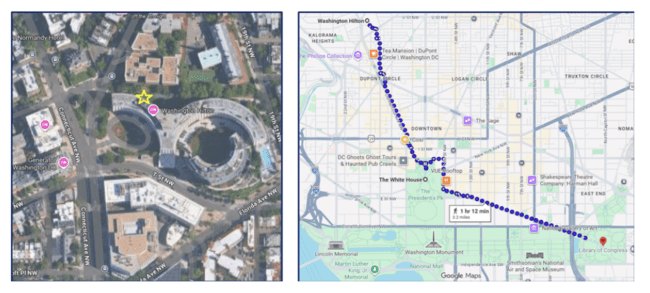
- Washington Hilton - 1919 Connecticut Ave NW
- This is the official hotel for the 2026 Housing Policy Forum. Check-in is at 4:00 pm, and check-out is at 11:00 am.
- The hotel is located a short metro ride from the National Mall and a 10-minute walk to the Dupont Circle Metro Station (Red Line).
- The hotel is 20 minutes away from Reagan National Airport and 40 minutes from Dulles International Airport.
- Hotel parking instructions here
EventsAir is NLIHC's mobile event app and is free to download to any smartphone device. The event app will allow you to view the full event schedule, download publications, connect with attendees and speakers, submit questions in advance for the plenary sessions, and so much more!
A link to download the event app will be sent to all attendees on Saturday, March 7 by 9:00 am ET.
Before You Pack
Click here for the latest forecast.
Around the Town
Upon check-in, please ask the Concierge for a full Washington, DC visitors' guide.
- The Washington Hilton is located in the heart of D.C.’s most desirable neighborhoods, including Dupont Circle, Adams Morgan, Kalorama, Georgetown, and Embassy Row.
- Washington Hilton to Capitol Hill – (up to) 20 min by car and 36 min by bus
- Embassy Row is 0.5 miles away from the Washington Hilton – 9 min by car and 33 min walk.
- If time allows, click here to book a tour of the monuments.
Travel & Transportation
- Plane: Ronald Reagan Washington National Airport (DCA), Baltimore/Washington International Thurgood Marshall Airport (BWI), and Dulles International Airport (IAD)
- Train: Metrorail and Amtrak
- Bus: Greyhound at Union Station
- Automobile: Here is a Google Maps link to enter your starting point, Washington Hilton.
Thank you, and we are looking forward to seeing you!
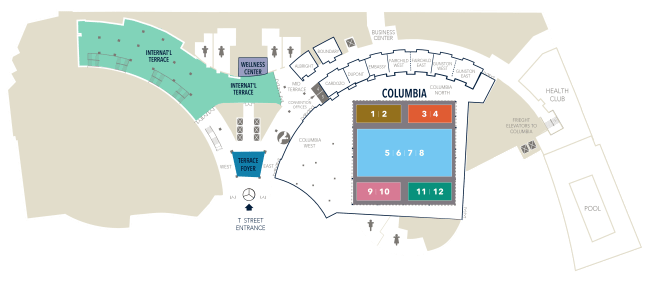
Washington Hilton | Floor Plan
Terrace Level
Hotel and Travel Scholarships
This window is closed.
NLIHC offers a limited number of lodging scholarships and travel reimbursement to ensure low-income individuals can participate in the annual Housing Policy Forum.
For questions, email [email protected]
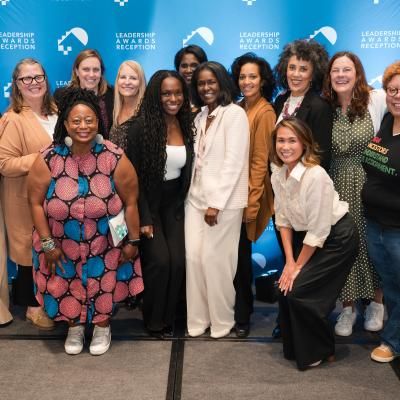
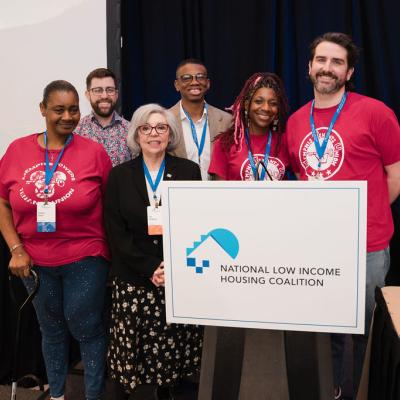
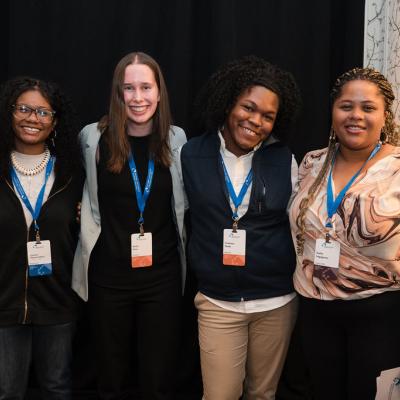
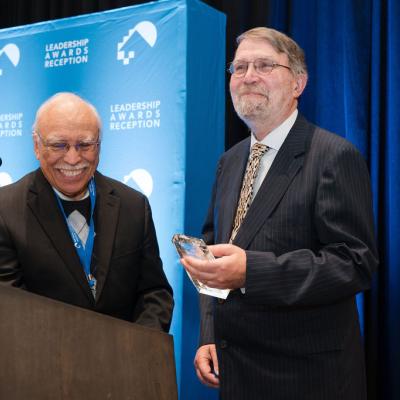
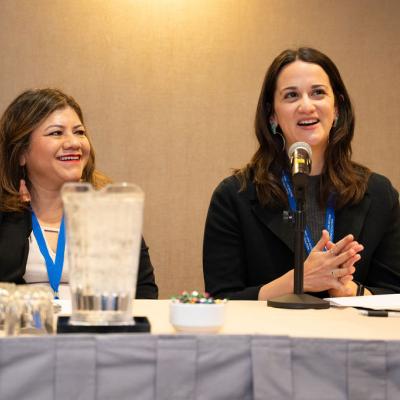
Check out moments from NLIHC's Housing Policy Forum 2025!