Despite a proven track record, federal housing programs are chronically underfunded. Just one in four households eligible for federal housing assistance actually receive the help they need, leaving the rest to struggle to afford the cost of rent.
Expanding resources available to help people with the lowest incomes find and maintain safe, stable, affordable, accessible housing depends on increasing federal appropriations. NLIHC monitors the federal budget process and advocates for the highest possible allocation of resources at HUD and the USDA Rural Housing Service to support deeply affordable housing and homelessness resources.
NLIHC is also a Steering Committee member of the Campaign for Housing and Community Development Funding, a coalition of over 75 national organizations working together to ensure robust resources to address America's housing crisis. Learn more here.
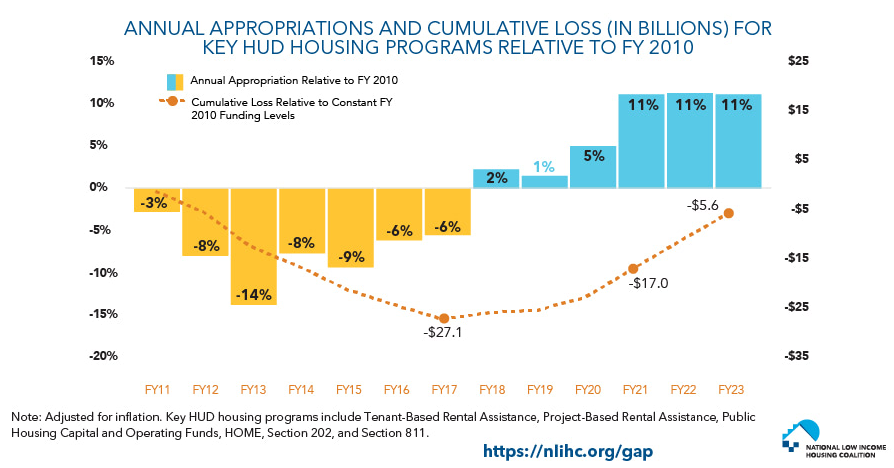
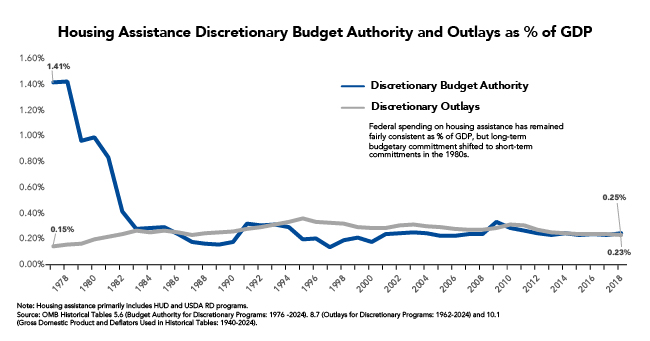
Budget Trends
 |  |
Budget Analysis for Fiscal Year 2026
NLIHC FY26 Budget Chart for Key HUD Programs (Updated 7/25/25)
- Analysis of President Trump's FY26 Budget Request
- Analysis of the House FY26 Budget Proposal
- Analysis of the Senate FY26 Budget Proposal
Budget Analysis for Fiscal Year 2025
NLIHC FY25 Budget Chart for Key HUD Programs (Updated 7/25/24)
- Analysis of President Biden's FY25 Budget Request
- Analysis of the House FY25 Budget Proposal
- Analysis of the Senate FY25 Budget Proposal
Budget Analysis for Fiscal Year 2024
NLIHC FY24 Budget Chart for Key HUD Programs (Updated 3/3/24)
- Analysis of President Biden's FY24 Budget Request
- Analysis of the House FY24 HUD Budget Proposal
- Analysis of the Senate FY24 HUD Budget Proposal
- Analysis of the final FY24 HUD Budget
Budget Analysis for Fiscal Year 2023
NLIHC FY23 Budget Chart for Key HUD Programs (Updated 12/19/22)
- Analysis of Final FY23 HUD Spending Bill
- Analysis of President Biden's FY23 Budget Request
- Analysis of the House FY23 HUD Budget Proposal
- Analysis of the Senate FY23 HUD Budget Proposal
Additional Resources
- Take Action on Appropriations!
- Factsheet: Impacts of Government Shutdown on Affordable Housing Programs
For more information on Budget and Appropriations, contact Kim Johnson, Senior Director of Policy, at [email protected].