
The Gap Press Contact and Kit
Please complete the information below to receive press updates on NLIHC's The Gap: A Shortage of Affordable Homes.
The press kit (Google Drive) contains images from The Gap that can be used online or in print. Permission to reprint all or some of the images is granted, provided appropriate credit is given to the National Low Income Housing Coalition (NLIHC). All images are copyright of NLIHC.
For questions regarding media coverage and reprints, please contact Lisa Marlow, Director of Communications, [email protected], 202-662-1530 x813.
Images From The Gap 2026
Individual graphics are available below, or download all of them.
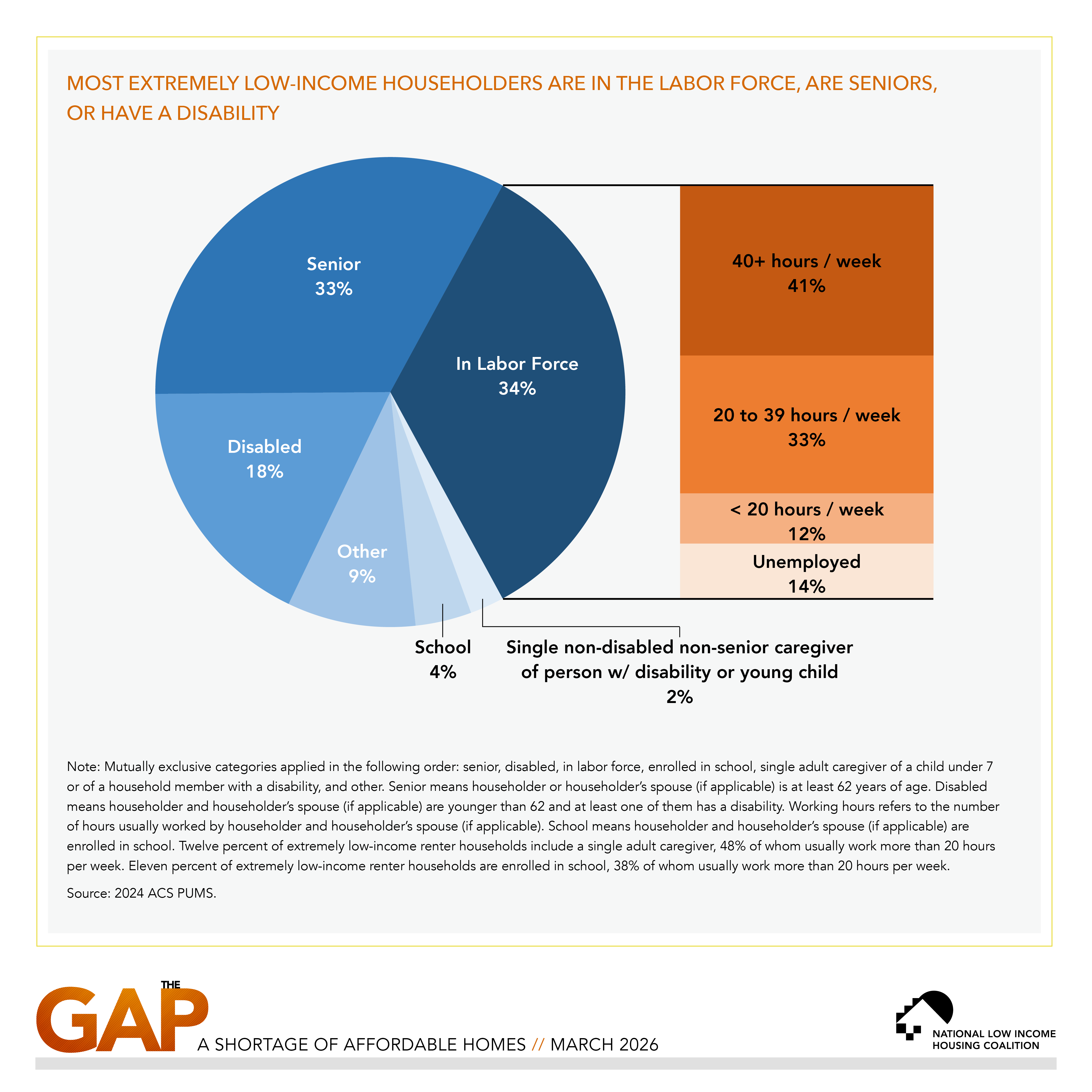
Who are Extremely Low-Income Renters?
Fifty-one percent of extremely low-income renter households are seniors or people with disabilities and another 40% are in the labor force, in school, or single-adult caregivers of school-aged children or family members with disabilities.
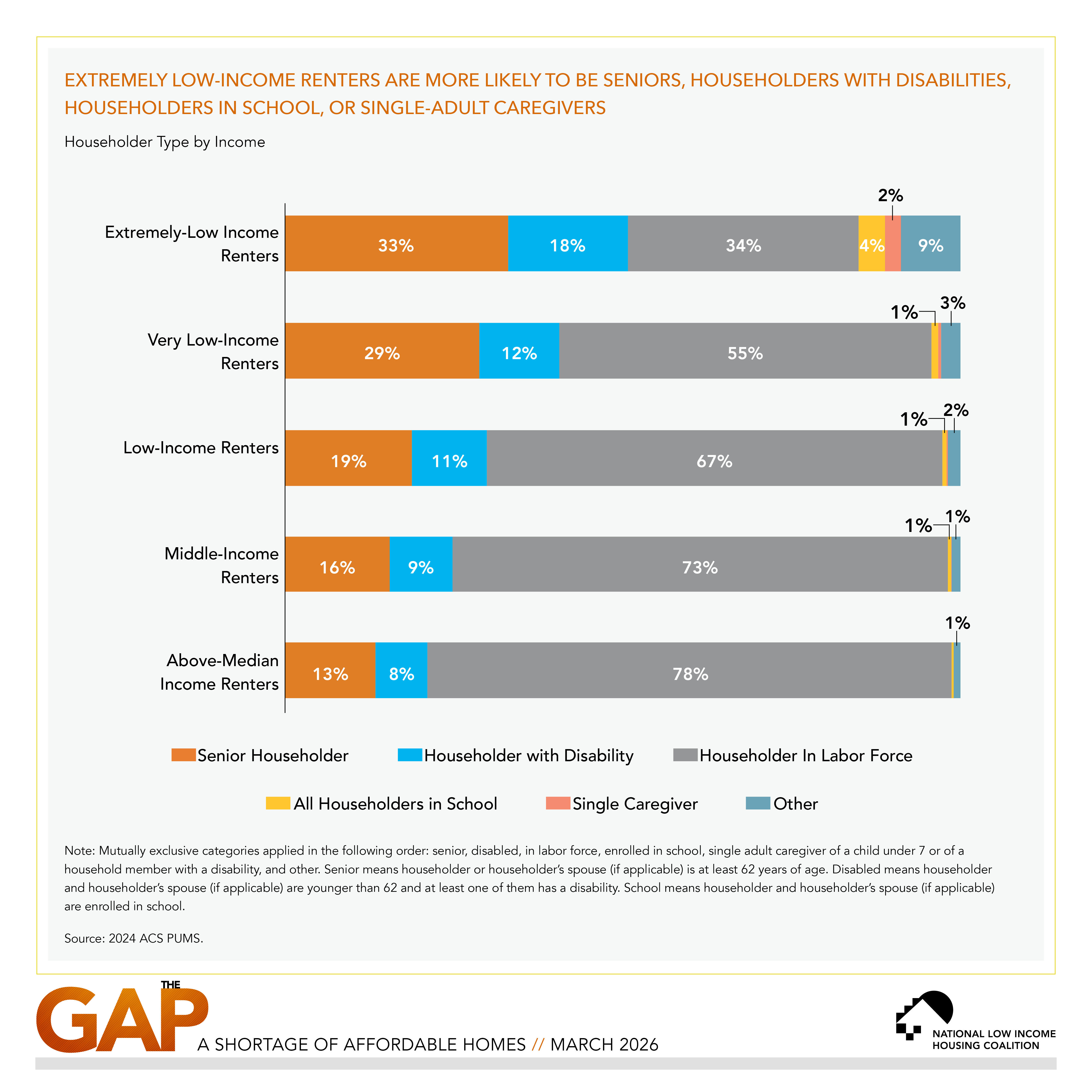
Extremely Low-Income Renter Characteristics that Constrain Income
Extremely low-income renters are more likely than renters of all other income groups to have characteristics that limit the hours that they are able to work: they are more likely than all other renters to be seniors, have a disability, be enrolled in school, or be single-adult caregivers of children or individuals with a disability.
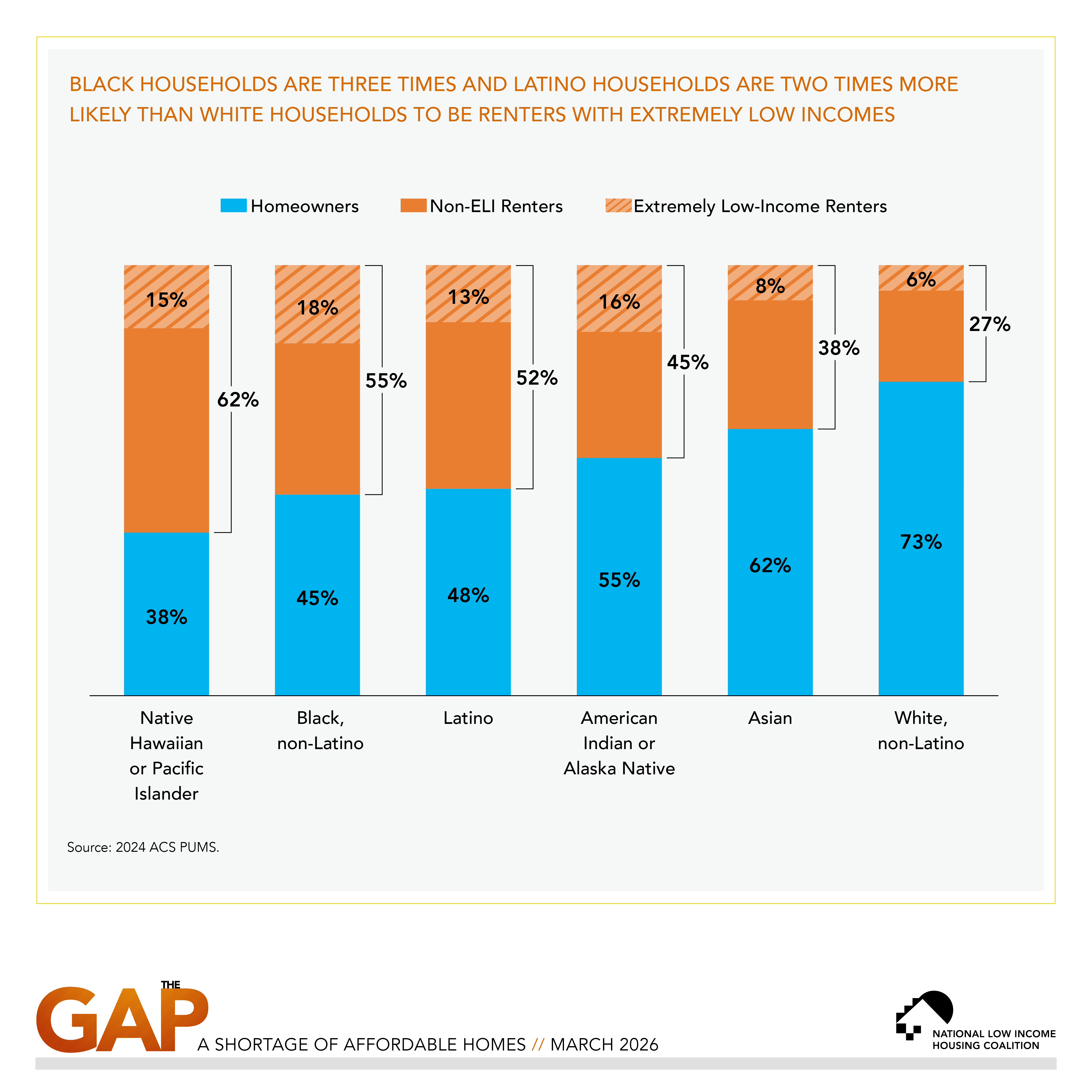
Share of Households by Tenure and Race
Black, Latino, Native Hawaiian or Pacific Islander, and American Indian or Alaska Native households are more likely than white households to be renters with extremely low incomes.
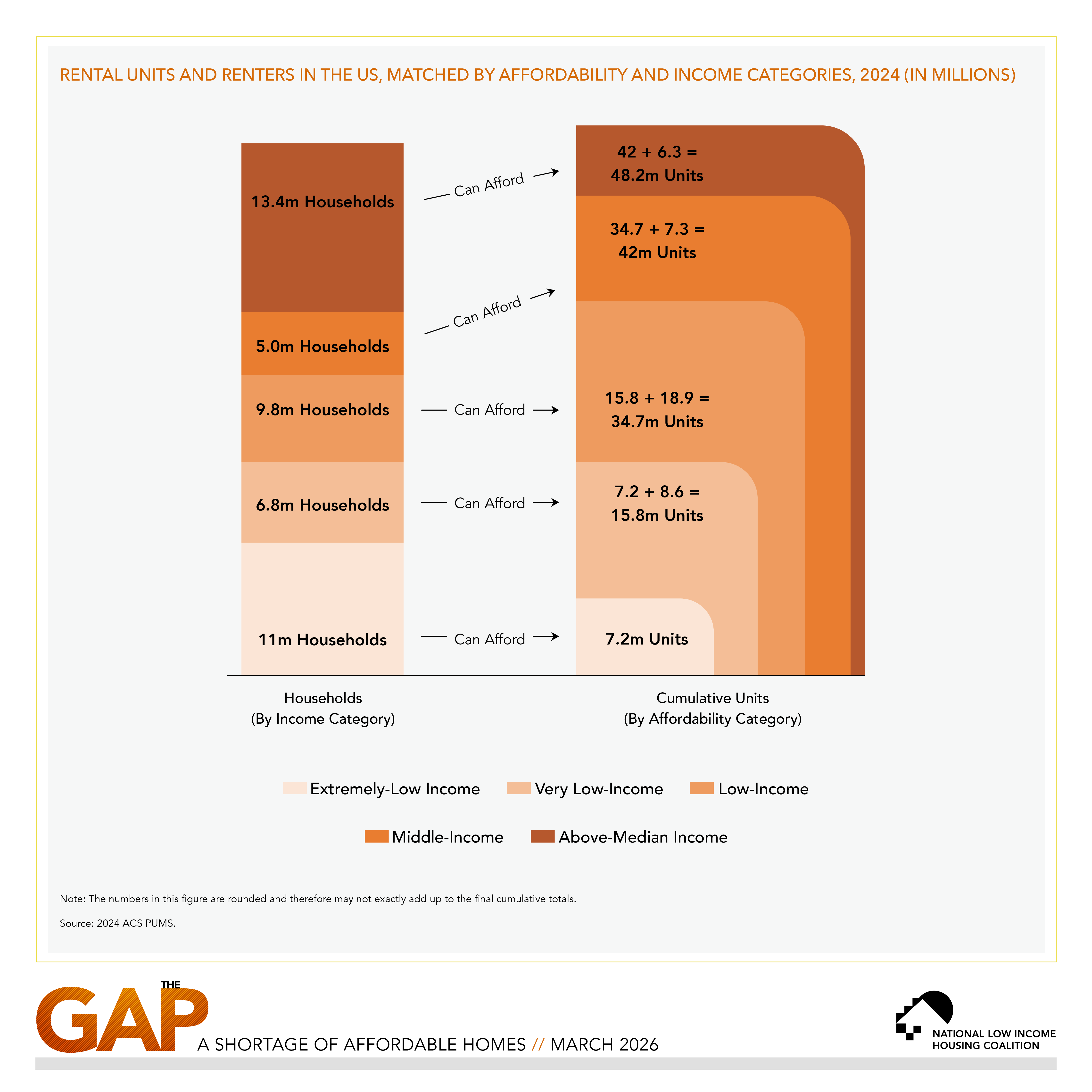
Renters and Rental Units in the U.S.
Chart of renters and rental units in the U.S., matched by income and affordability categories. Renters with extremely low incomes face an absolute shortage of affordable rental homes.
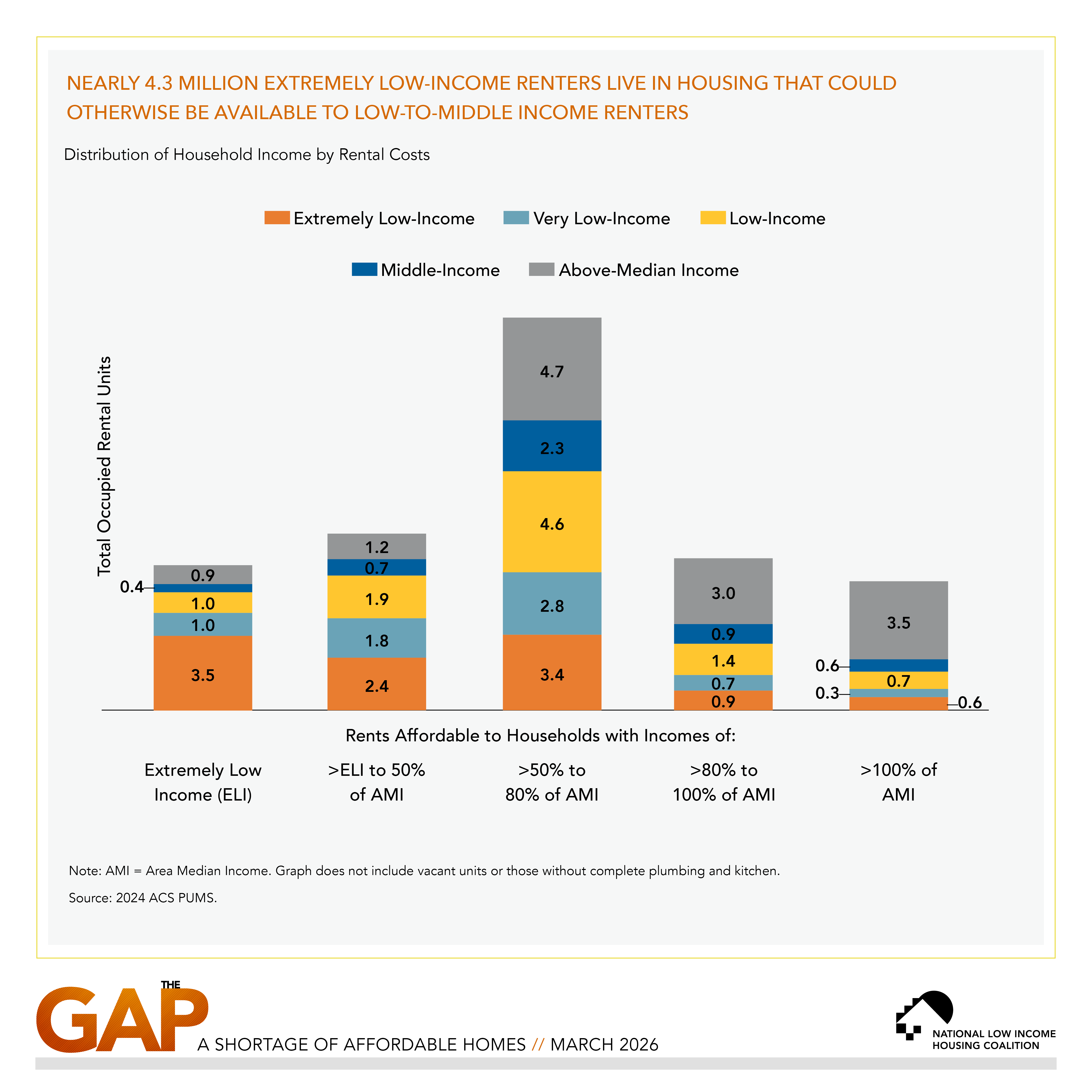
Distribution of Household Income by Rental Cost
Graph showing the distribution of renters by income into rental housing of different affordability levels. Most extremely low-income renters reside in unaffordable housing that would otherwise be affordable and available for higher-income households.
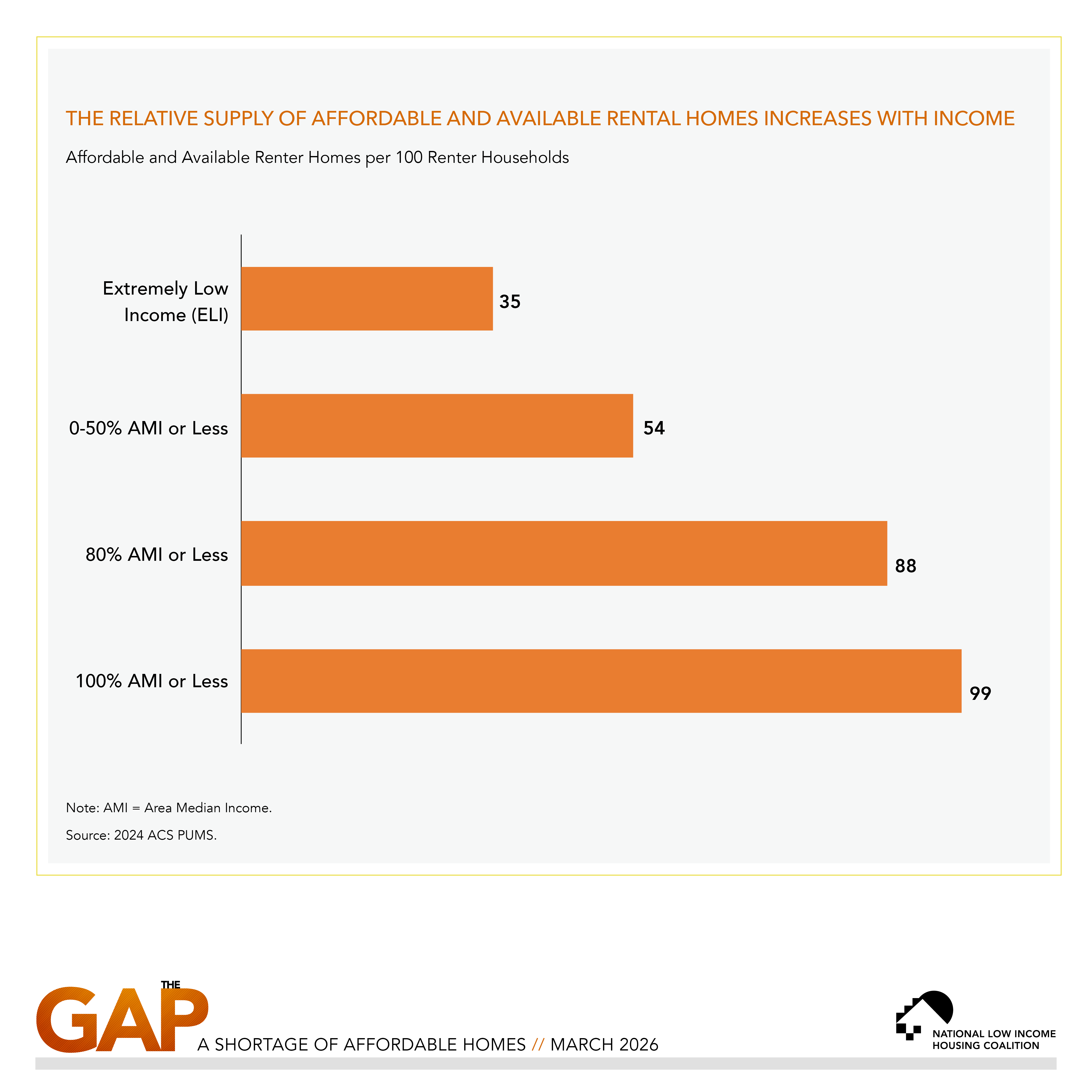
Affordable and Available Rental Homes per 100 Renter Households
Chart showing affordable and available rental homes per 100 renter households at extremely low income, 50% of Area Median Income (AMI), 80% of AMI, and 100% of AMI.
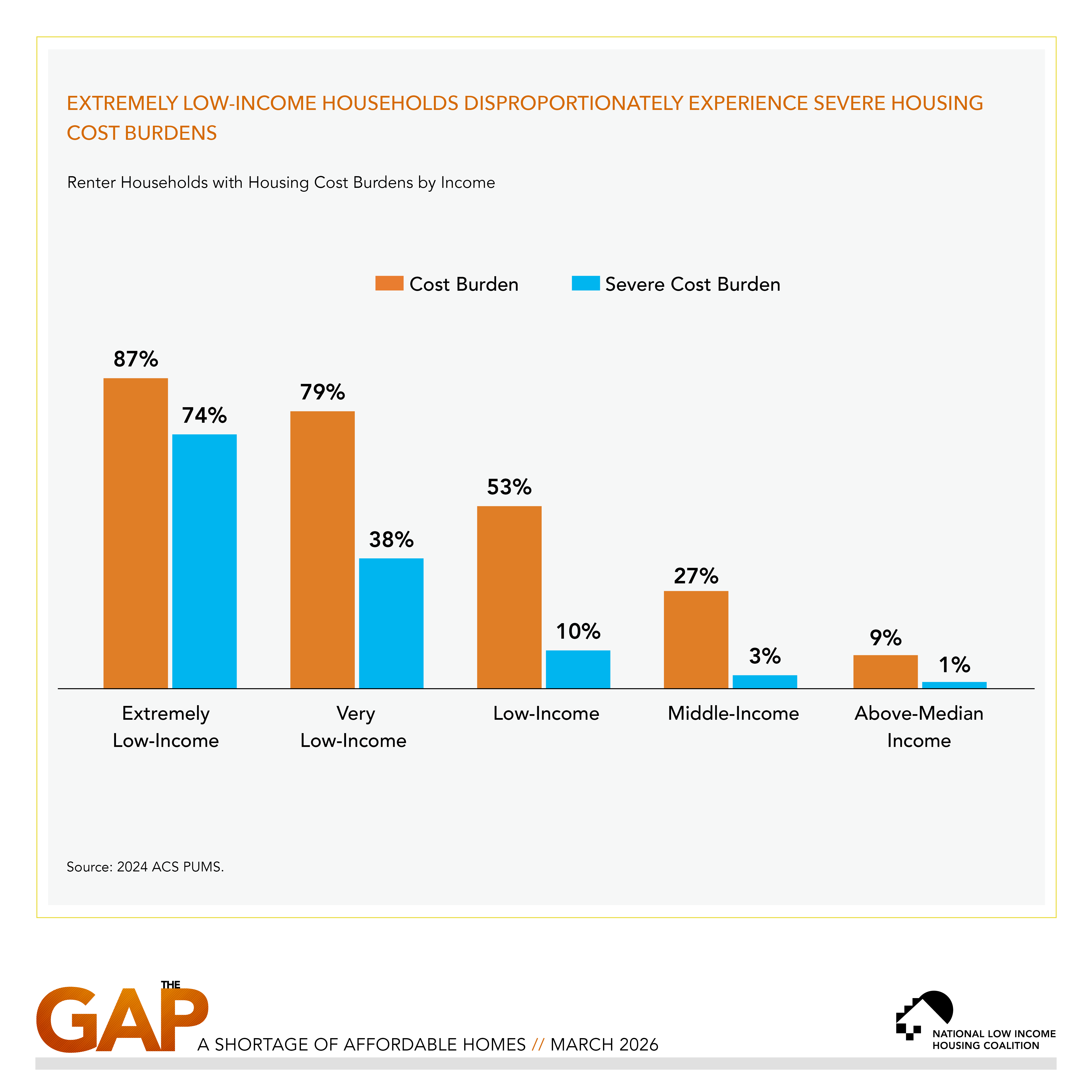
Housing Cost Burdens by Income Level
Renters with extremely low incomes are much more likely than other renters to be severely housing cost-burdened.
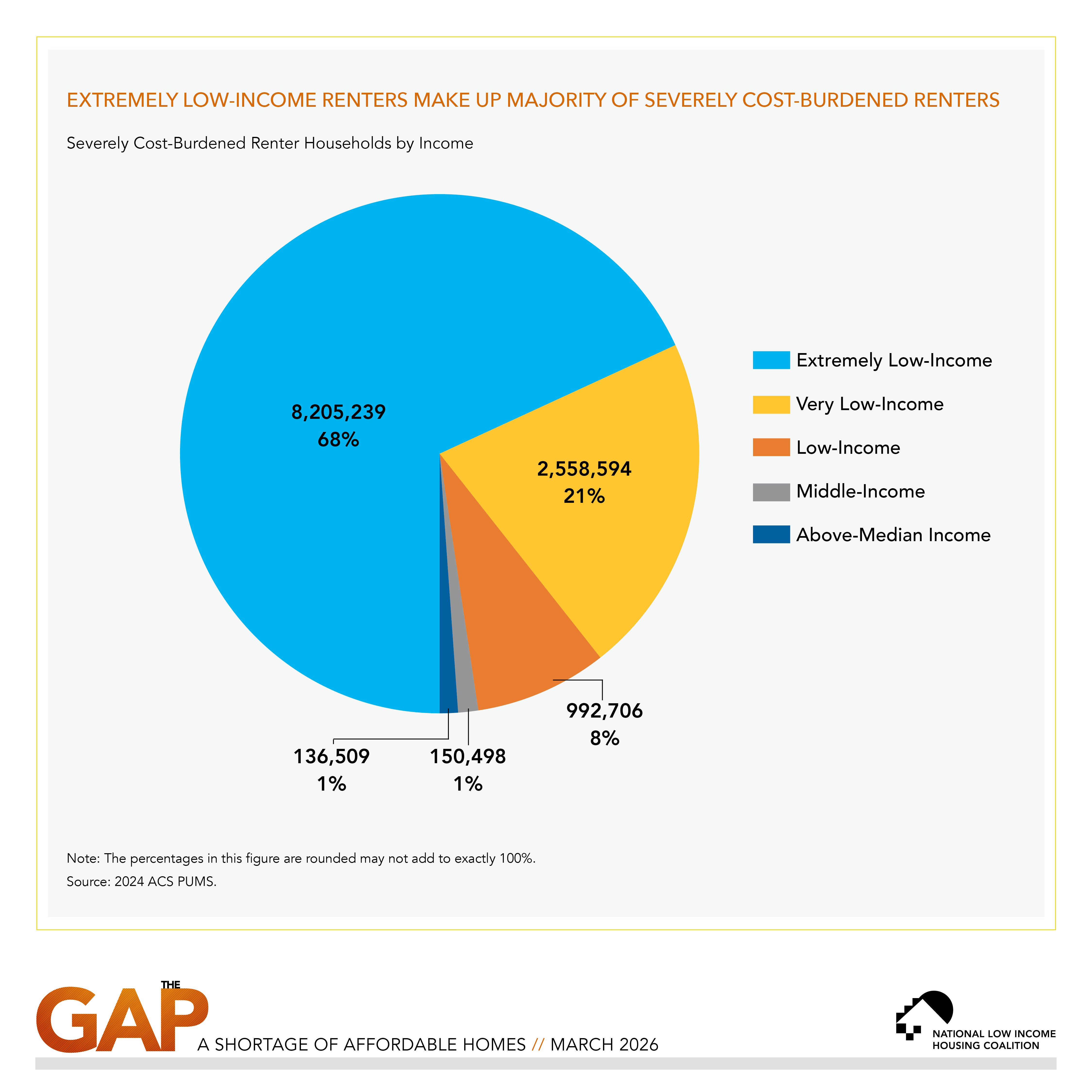
Severely Housing Cost-Burdened Renters
Renters with extremely low incomes account for most severely cost-burdened renters in the United States.
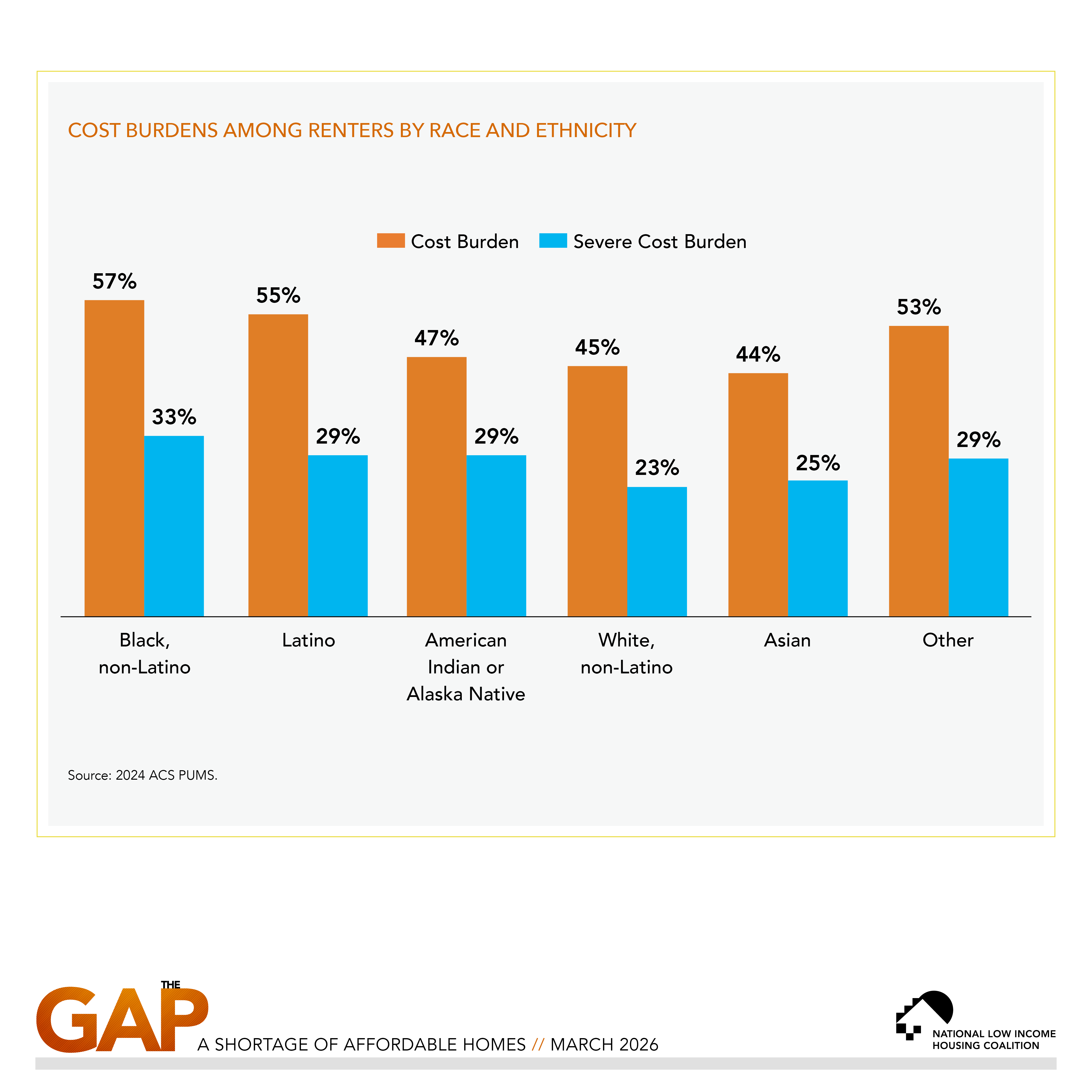
Renter Household Cost Burdens by Race and Ethnicity
Renter households of color are more likely to be housing cost-burdened or severely housing cost-burdened than white renter households.
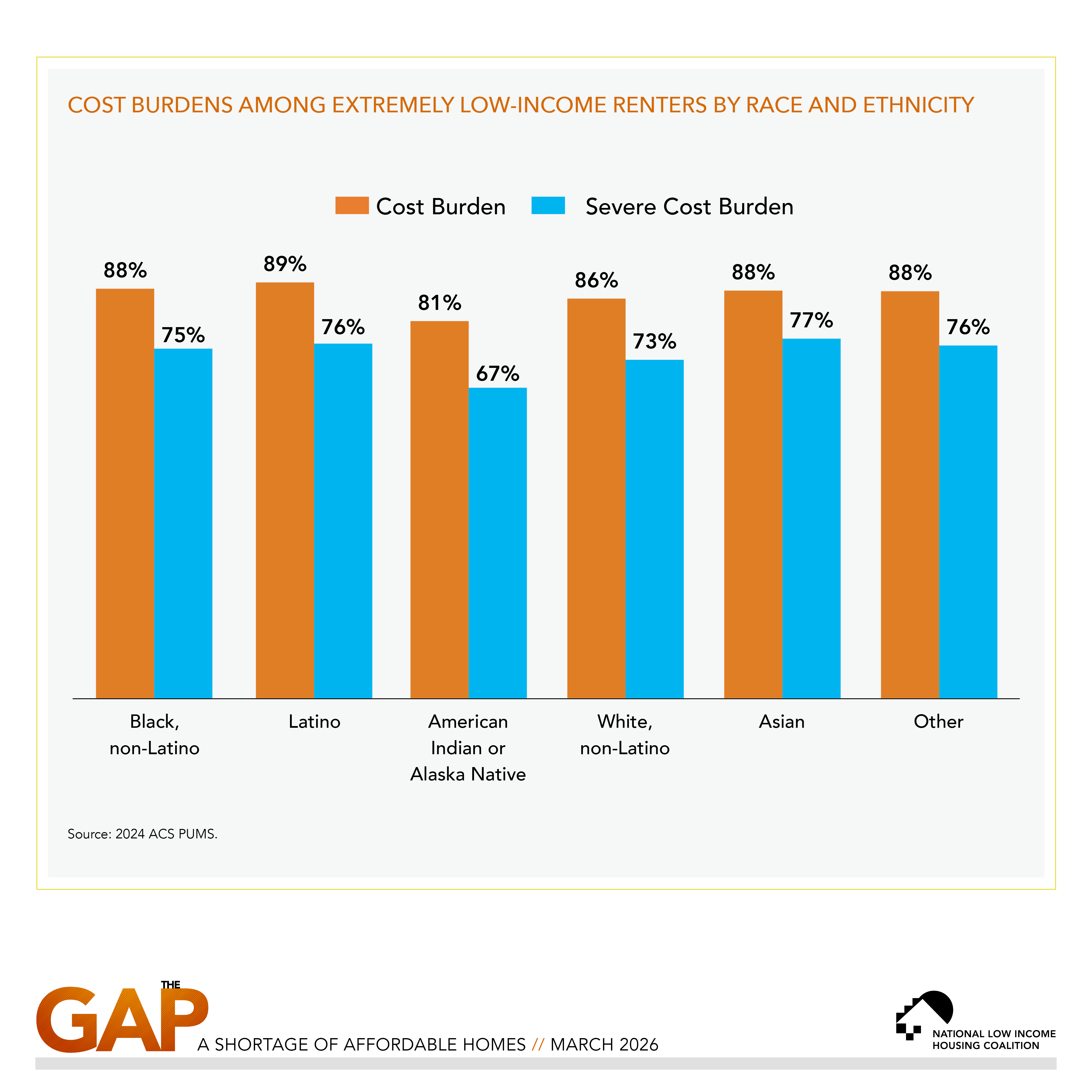
Cost Burdens Among Extremely Low-Income Renters by Race and Ethnicity
More than two-thirds of extremely low-income renter households across all racial and ethnic groups experience severe housing cost burdens.
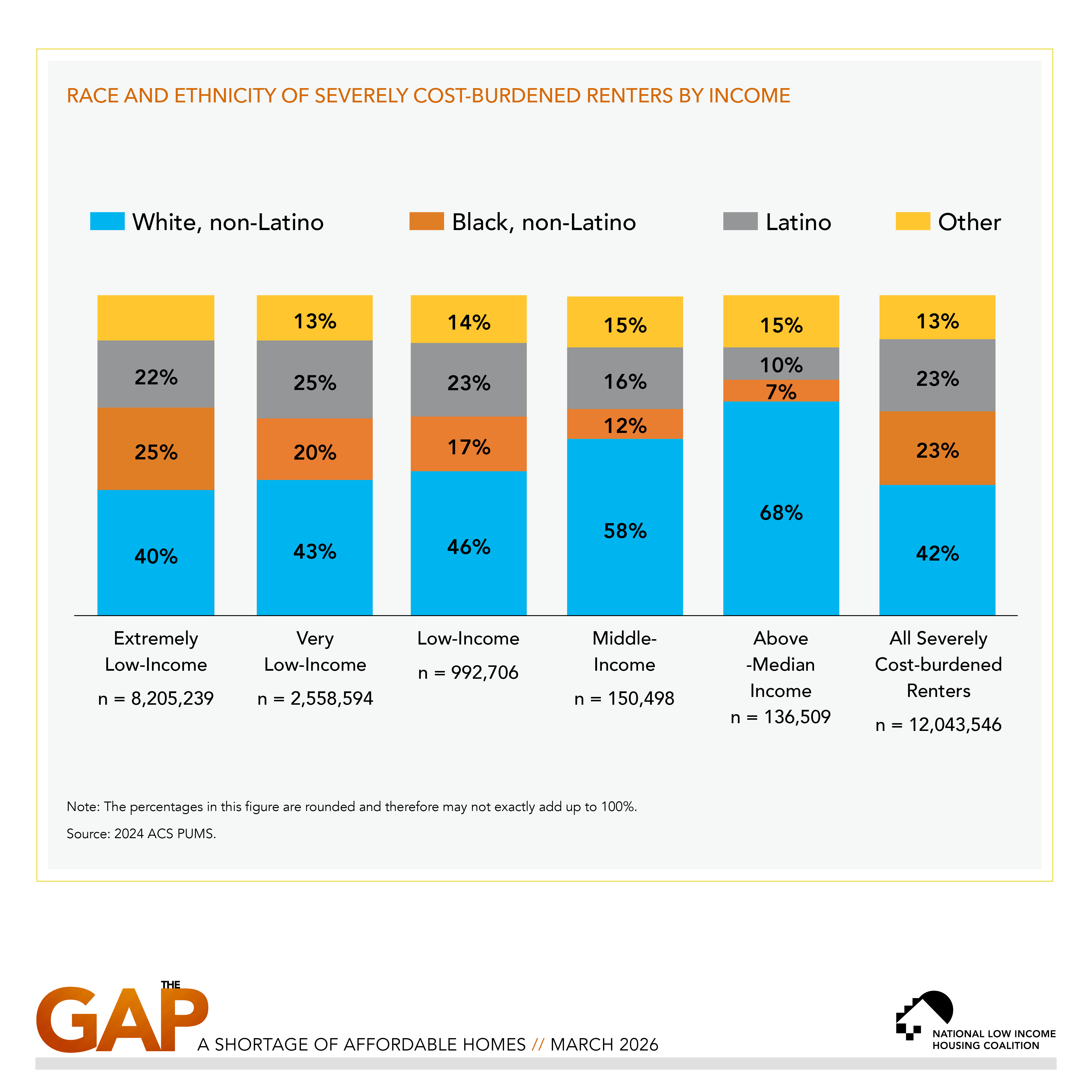
Race and Ethnicity of Severely Cost-Burdened Renters by Income
Black and Latino renters account for 47% of severely- cost-burdened extremely low-income renters. With each subsequently higher income level, they account for a decreasing share of severely cost-burdened renters.
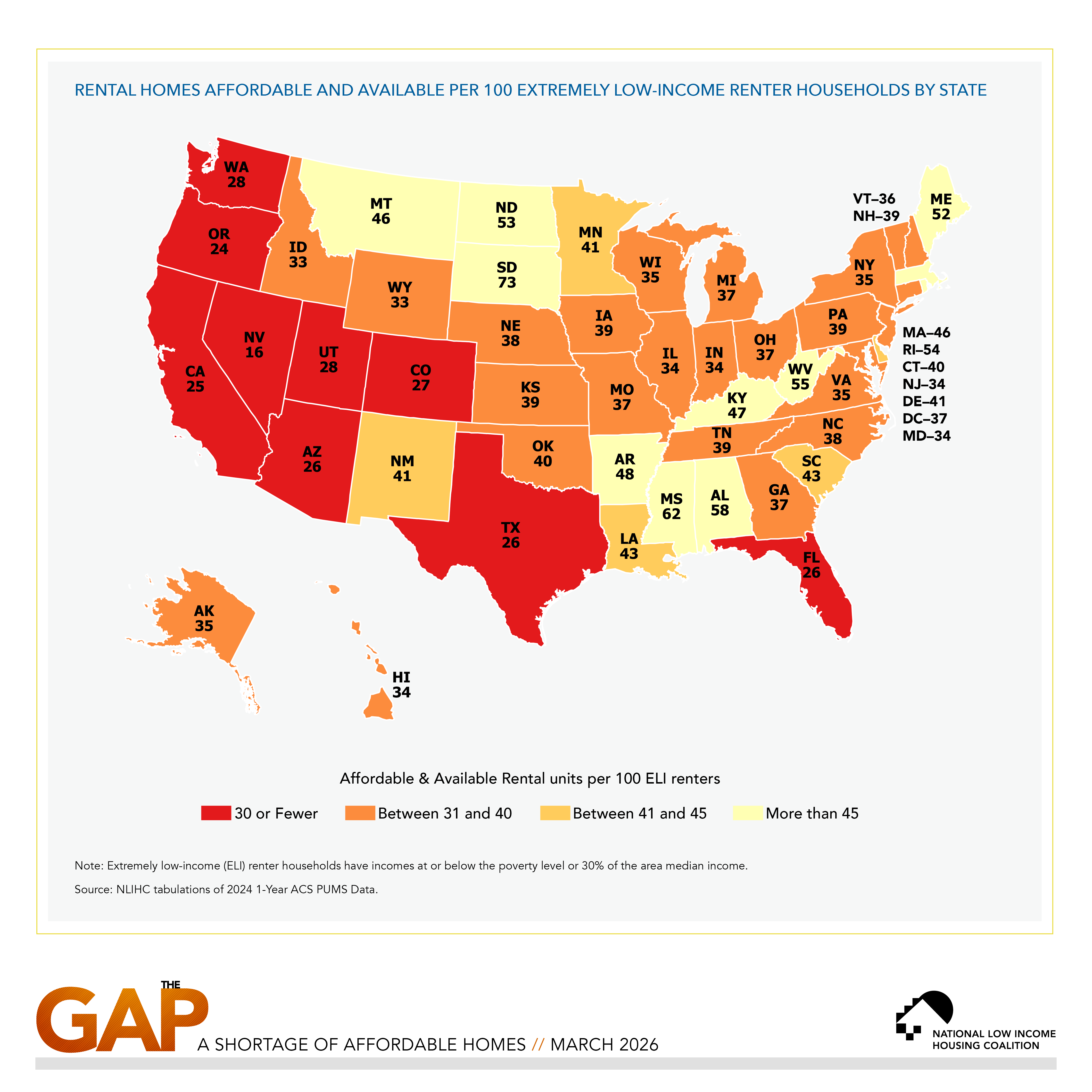
Affordable and Available Rental Homes by State
Map displays the number of affordable and available rental homes for every 100 extremely low-income renter households by state. No state has an adequate supply.
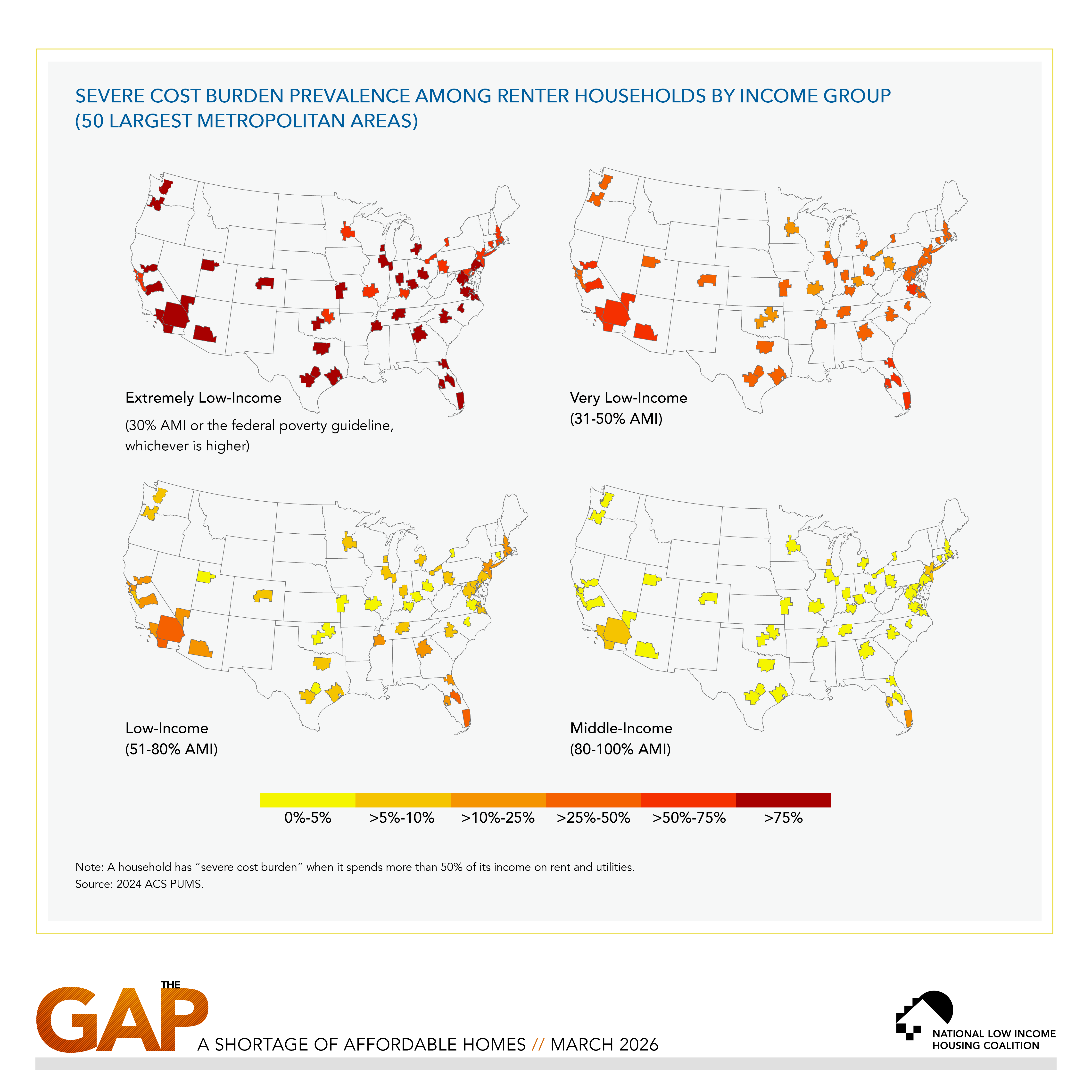
Severe Cost Burden Prevalence Among Renter Households by Income Group (Top 50 Metropolitan Areas)
Prevalence of severe housing cost burdens for renter households by metropolitan area; each map represents an income group. Maps show that severe cost burdens are pervasive for extremely low-income renters in all 50 of the top metropolitan areas and become less pervasive for each successively higher income group. For middle-income renters, severe cost burden rates are at or below 5% in all but six of the top 50 metropolitan areas.
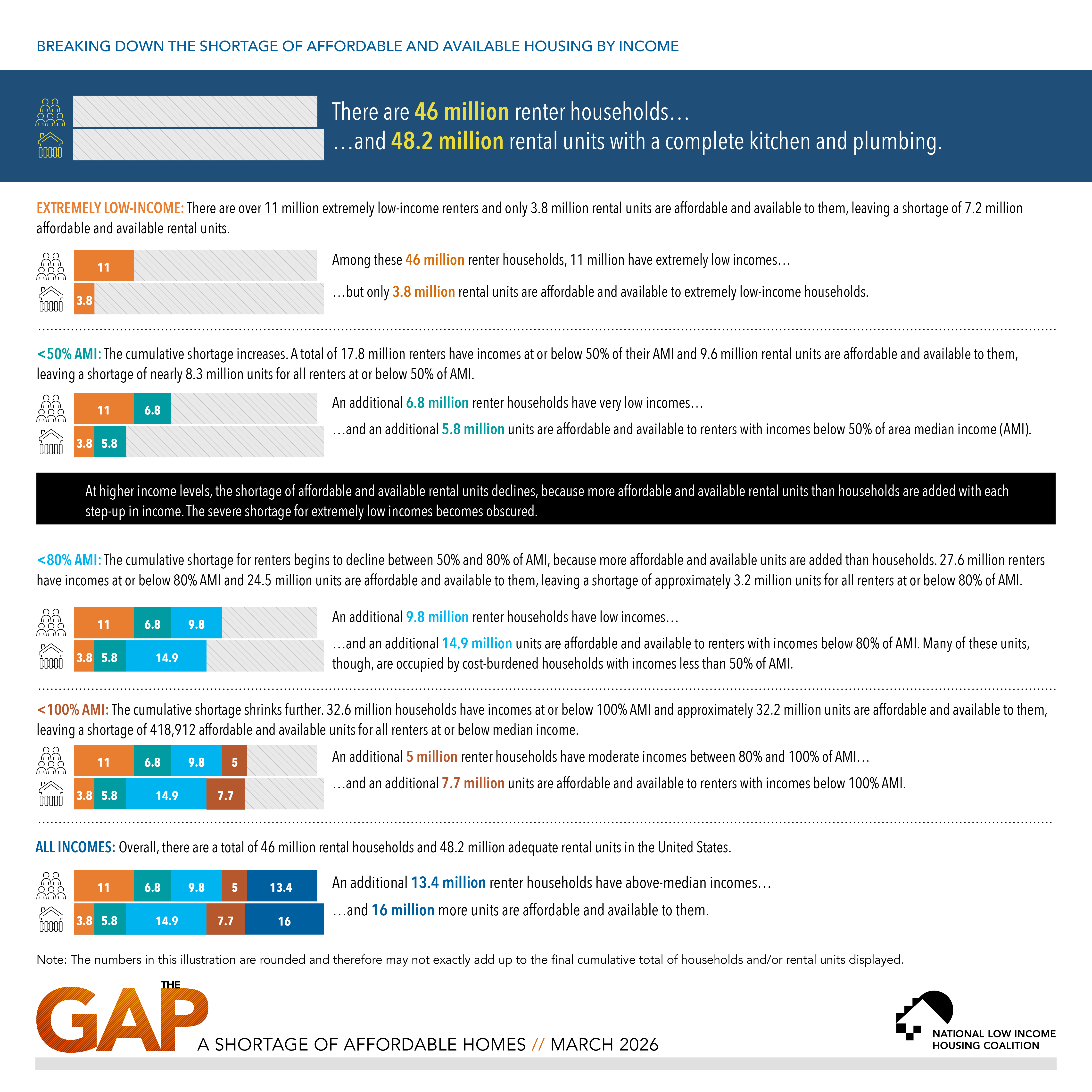
Incremental Changes to the Shortage of Affordable and Available Housing by Income Level
Extremely low-income renters account for most of the shortage of affordable and available rental homes in the United States.